How to Become a Life Insurance Agent — The Complete Walkthrough
Licensing requirements, background checks, fingerprinting, state-by-state fees, resident vs. non-resident rules, and what to expect in your first year. Everything in one place.

The Licensing Process — Step by Step
Step 1 — Pre-Licensing Education
Every state requires completion of a state-approved pre-licensing course before you can sit for the exam. Hours vary by state and by the lines of authority you’re pursuing.
Most agents pursue the combined Life & Health line. Typically 20–40 hours of pre-license education. Some states (TX, FL, CA) require more hours — up to 60.
If you only plan to sell life insurance products, you can pursue the Life Only line — shorter study requirements in most states. You can add Health later.
Online is available in all states and lets you study at your own pace. Providers like Kaplan, ExamFX, and A.D. Banker offer state-specific courses for $50–$200.
State exam pass rates average 55–70% on the first attempt. Multiple retakes are allowed, but each costs $40–$75. Study seriously — most failures are underpreparation, not difficulty.
Step 2 — Background Checks
All states conduct a criminal background check as part of the licensing process. Most also check FINRA BrokerCheck, prior insurance license history, and outstanding regulatory actions.
What they check
Felony convictions — especially financial crimes, fraud, or dishonesty — are the most common disqualifiers. Minor misdemeanors from years ago rarely prevent licensing. Each state evaluates on a case-by-case basis. You can often get an advance consent determination from the state DOI before you invest in pre-licensing.
Some states check credit history, tax liens, or bankruptcy records — especially for applicants seeking to sell financial products (annuities, IUL). A bankruptcy alone rarely disqualifies you, but fraud-related financial crimes always will.
The NIPR database contains all prior insurance license applications, terminations, and regulatory actions nationwide. If a previous license was revoked or suspended, you must disclose it and it will heavily factor into the review.
If you plan to sell variable life or annuity products, FINRA registration (Series 6 or 7) is additionally required. FINRA BrokerCheck history is reviewed during the licensing process for these product lines.
Disqualifying vs. Non-Disqualifying Offenses
| Offense Type | Likely Impact | Notes |
|---|---|---|
| Felony fraud / financial crime | Usually disqualifying | Federal law (18 U.S.C. § 1033) bars individuals with certain felony convictions unless a waiver is granted |
| Other felony (non-financial) | Case by case | Time since conviction, nature of offense, and rehabilitation evidence all considered |
| Misdemeanor (non-financial) | Usually approvable | Must still be disclosed; old minor charges rarely deny |
| Bankruptcy | Usually approvable | Disclosure required; fraud-related BK is different |
| DUI (single, old) | Usually approvable | Disclose; states vary on look-back period |
| Prior license revocation | Heavy scrutiny | Must disclose; may require waiting period or explanation |
This is informational only — not legal advice. Consult a licensed attorney if you have a criminal history before investing in pre-licensing.
Step 3 — Fingerprinting
Approximately 35 states require fingerprinting as part of the licensing process. This is used for an FBI criminal background check — separate from the state-level check.
How fingerprinting works
Most states use Live Scan — electronic fingerprint capture at an approved vendor (IdentoGO, MorphoTrust, or state-specific). Results are transmitted directly to the FBI and state DOI. Cost: $22–$55 plus service fees.
A few states still use traditional ink fingerprint cards mailed to the state DOI. Slower (2–4 weeks processing) and more error-prone. Ink cards may be rejected if smudged — follow the provider’s instructions precisely.
Fingerprint requirements by state
| State | Required | Method | Approx. Cost | Provider |
|---|---|---|---|---|
| California | Required | Live Scan | $118 | Accurate Biometrics (CDI-approved) |
| Texas | Required | Live Scan | $38–$42 | IdentoGO / L1 Identity |
| Florida | Required | Live Scan | $48 + tax | IdentoGO |
| New York | Not Required | — | N/A | No fingerprint required |
| Georgia | Required | Live Scan | $27–$40 | IdentoGO |
| Illinois | Required | Live Scan | $29–$44 | IdentoGO |
| Ohio | Required | Live Scan / Ink | $22–$38 | WebCheck / IdentoGO |
| Pennsylvania | Required | Live Scan | $22–$35 | IdentoGO |
| North Carolina | Required | Live Scan | $25–$38 | IdentoGO |
| Arizona | Required | Live Scan | $22–$35 | IdentoGO / Cogent |
| Colorado | Required | Live Scan | $25–$38 | IdentoGO |
| Michigan | Not Required | — | N/A | — |
| Washington | Not Required | — | N/A | — |
| Virginia | Not Required | — | N/A | — |
| Tennessee | Varies by line | Ink Card | $15–$25 | State DOI |
Requirements change — always verify with your state’s Department of Insurance before submitting. Visit nipr.com or your state DOI website for current instructions.
Step 4 — Licensing Fees by State
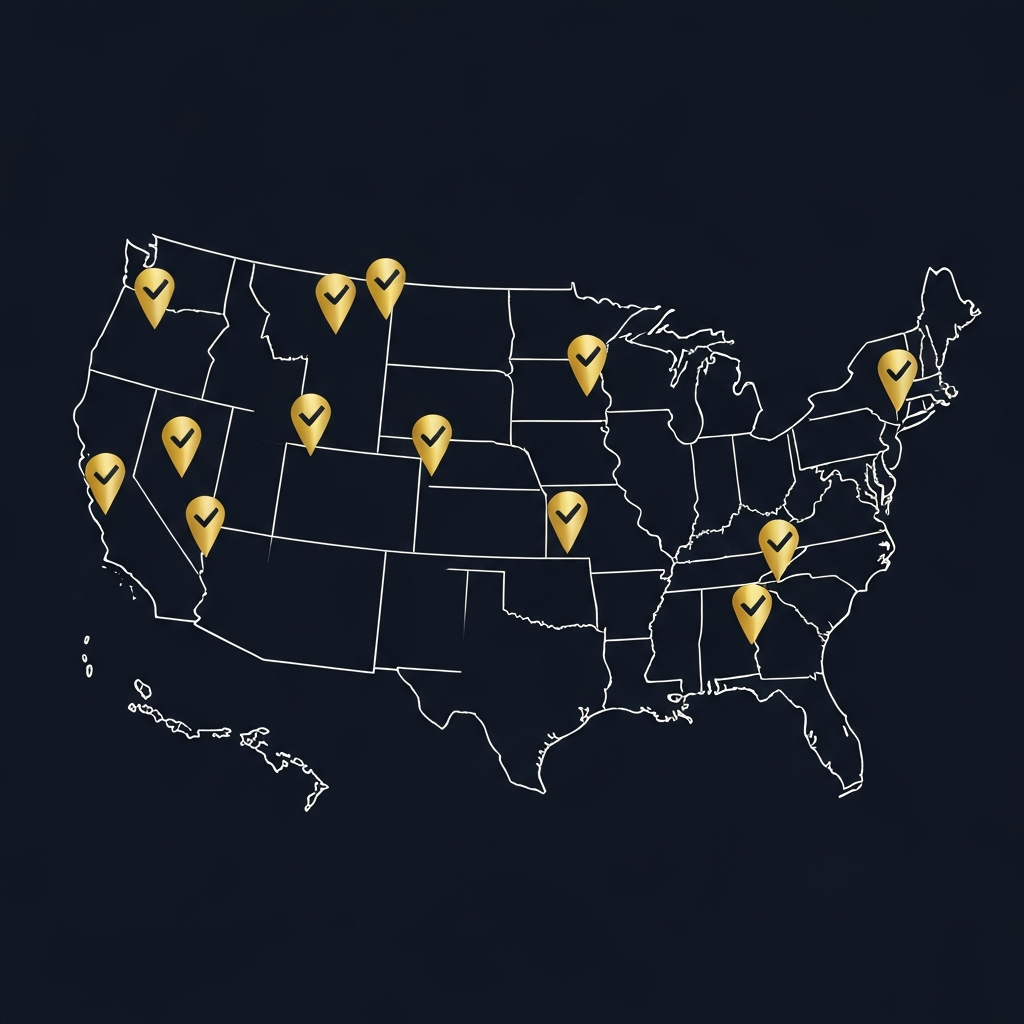
Step-by-step walkthrough of the licensing process
Fees below are for a resident Life & Health license (initial application). Non-resident fees are typically the same or slightly lower. Fees are paid at the time of application submission.
| State | Pre-License Course | Exam Fee | License Application | Total Est. Cost |
|---|---|---|---|---|
| California | $99–$199 | $55 | $188 | $342–$442 |
| Texas | $79–$149 | $43 | $50 | $172–$242 |
| Florida | $75–$150 | $54 | $75 | $204–$279 |
| New York | $99–$199 | $47 | $80 | $226–$326 |
| Georgia | $75–$130 | $63 | $130 | $268–$323 |
| Illinois | $75–$129 | $55 | $50 | $180–$234 |
| Pennsylvania | $75–$129 | $65 | $75 | $215–$269 |
| Ohio | $59–$99 | $44 | $50 | $153–$193 |
| North Carolina | $59–$99 | $44 | $100 | $203–$243 |
| Arizona | $59–$99 | $44 | $60 | $163–$203 |
| Colorado | $59–$99 | $42 | $75 | $176–$216 |
| Michigan | $59–$99 | $44 | $10 | $113–$153 |
| Virginia | $59–$99 | $35 | $30 | $124–$164 |
| Tennessee | $59–$99 | $42 | $60 | $161–$201 |
| Nevada | $75–$129 | $50 | $75 | $200–$254 |
Resident vs. Non-Resident Licensing
Your resident state is where you live and hold your primary license. A non-resident license lets you sell in additional states without moving there — critical for phone-based agents and remote sales roles.
Your home state license. Requires full pre-licensing education, state exam, background check, and fingerprinting. Must hold a resident license before applying for non-resident in most states. Renewal typically every 2 years with CE requirements.
No exam required in most states — your resident state exam satisfies the requirement via reciprocity. Apply through NIPR online. Most non-resident licenses issue within 5–10 business days. Cost: $20–$80 per state.
Most states participate in the NAIC Uniform Licensing initiative. If your resident state is a reciprocity partner, non-resident applications are streamlined — no additional exam, no pre-license course. Florida, California, and New York have specific additional requirements.
Most competitive remote agents hold licenses in 10–25 states. Top phone-based agents prioritize high-population states: CA, TX, FL, NY, GA, NC, OH, PA, IL, AZ. Total cost for 10 non-resident licenses: $300–$600 one-time.
States with Additional Non-Resident Requirements
| State | Extra Requirement | Impact |
|---|---|---|
| Florida | State-specific application + extra disclosure | +5–10 day processing |
| California | CA state exam required if your resident state is not a CA reciprocity partner | May need to take CA exam |
| New York | NY state exam required for all non-residents | Must pass NY exam separately |
| Utah | Additional background check form | Minor delay only |
| Montana | Fingerprinting required even for non-residents | +$30–$40 cost |
Recommended Study Resources
All resources below are commercially available — no endorsement implied. Prices are approximate as of 2025.
What to Expect in Year 1
Evaluating Your First Agency Contract
Before you sign anything, verify these 8 items. Use our Deal Analyzer to model the actual numbers.
- Commission rate is clearly stated (both base and max) — not just “competitive”
- Lead cost per lead is disclosed and in writing — including whether they’re exclusive or shared
- Chargeback policy states the window, who is responsible, and how it’s collected
- Open release policy is confirmed — you can leave and keep carrier appointments
- No mandatory upfront training fees before your first policy is written
- Vesting schedule is stated — when do you own your renewals?
- Non-compete terms reviewed — geographic scope, duration, and what exactly is restricted
- Day-1 out-of-pocket cost is calculated — leads + E&O + tools + licensing = real number
Training Partners & Study Resources
The resources below are used by thousands of agents every year. Where affiliate links are available, lifeinsurance.jobs may earn a small commission — at no cost to you.
Affiliate disclosure: lifeinsurance.jobs may receive a commission when you purchase through links marked AFFILIATE. This does not affect price or our editorial independence.
Ready to Evaluate Your First Offer?
Run any agency offer through the Deal Analyzer — see your real net income before you sign.